
Online retail in the country is expected to grow to $200 billion by 2026, up from $15 billion in 2016.

Billionaire Mukesh Ambani's Reliance Industries Ltd on Friday announced to raise Rs 7,350 crore from two investors -- Singapore's sovereign wealth fund GIC and Global alternative asset firm TPG -- by selling a stake in group's retail arm.

Malls, retail stores are being hit by online sales and are struggling this festive season.

The threat may be a decade away, but it has brick-and-mortar sellers rethinking their strategies and banking on the govt to regulate online companies.

Its growth has been driven by discounts rather than enticing new customers to its platform

Online biggies and global retail giants are working on being omnipresent in both the virtual and the real world to see what helps them get the numbers, says Karan Choudhury.

While festive season spends by consumers did contribute to the uptick seen in Q3, experts said greater aggression displayed by retailers to corner a larger share of the shopper's wallet also worked.

Retailer bodies to demand govt action against I-Day sales offers, threaten legal action for breach of FDI rules.

When Open Network for Digital Commerce (ONDC) was conceived last December, the idea was to reduce the dominance of e-commerce giants like Amazon and Flipkart. It was also to bring in a level-playing field for small merchants in India's fragmented but fast-growing $1-trillion retail market. However, those goals have changed now as large e-commerce players such as Flipkart, Amazon and Ecom Express are in various levels of talks with the ONDC team. They want to form partnerships like integrating with the network as well as providing their expertise to build it, according to the industry sources.

India's rank was further amplified by the collapse of the South American and Russian economies.

Shoppers Stop returns to its core business after divestments. The retailer plans growth through web and private labels.

Sellers, especially the smaller ones, are planning to go to court as well as move CCI as they fear that Walmart could bring multiple private labels in India and flood the e-commerce platform with its own products.

India has a tradition of rich narrative and storytelling and hence it's a natural market for self publishing, believes Jon P Fine, Amazon's director (author and publishing relations).

Walmart-owned fintech firm PhonePe said it has crossed 500 million lifetime registered users on its platform. With this milestone, 1 in 3 Indians are now on PhonePe. The company said it is the first Indian internet company to have reached this scale globally. This milestone has been achieved in just over 7 years since the PhonePe UPI (Unified Payments Interface) payments launched in August 2016.

Global sales made via mobile devices are expected to top $638 billion.
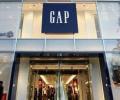
The brand plans to open about 40 franchise-operated Gap stores in India, the company said in a statement.

Reliance Industries (RIL) has been distilling its investment strategy to meet new goals. The share of the new energy vertical - its key focus area - accounts for more than a fourth (26 per cent) of the total war chest of $6.4 billion, ploughed into acquisitions and picking up stake from 2018 to date, reveals the latest Morgan Stanley data. Nearly half the incremental investments made on deals by RIL between August 2020 and September this year ($3.3 billion) has been spent on new energy - acquiring global companies with technology and expertise.

Still, the earliest India will get to experience Apple online will be early 2020 and the company's first fully-owned signature store should be up around 2022 -- almost two decades after it had opened its first store worldwide, writes Nivedita Mookerji.
Recent easing of restrictions does not address the pain in the sector.

E-commerce firms Amazon, Flipkart, and others are expected to witness blockbuster festival season sales of around $9 billion this year, surpassing pre-pandemic sales of $5 billion in 2019. The pandemic has accelerated the shift to e-commerce, with more consumers shopping online at a higher frequency than last year, observed analysts. This year's festival sales (gross merchandise value or GMV) are expected to grow 30 per cent year-on-year (YoY) to $4.8 billion during the first week of the season and potentially clock over $9-billion GMV during the whole festival month, revealed consulting firm RedSeer's e-commerce festival season report.

Many industry executives have said the draft e-commerce policy is being perceived as nationalistic but not overly protectionist and it is providing preference to Indian players against foreign companies. This might have an impact on investment by large players such as Walmart and Amazon in the country, said the executives. They said e-commerce was a very small portion of the retail industry and at a nascent stage and did not require heavy hammer regulations. Though the policy talks about being equally applicable to foreign and domestic players, it mentions that foreign direct investment (FDI) takes precedence over the e-commerce policy in any area of overlap.

Shoppers Stop plans to open five or six department stores and 10-12 beauty stores this year

'Post-Covid world will be different from the pre-Covid world.'

Physical format stores are here to stay.

The legal regime does not permit home delivery of medicines, tough owing to situation of COVID-19 pandemic and an emergency-like situation, the government allowed the home delivery of medicines but it was meant for only neighbourhood pharmacies, AIOCD said.

Policy constraints may prevent many of the global retail giants from reaching their full potential.There are too many restrictions right now in the sector and policy makers lack clarity.

The e-commerce marketplace is like an information intermediary these days.

'Even during the pandemic we did it.' 'We think it's our responsibility to make sure that we manage the uncertainty.'

RRVL will make an open offer to acquire up to an additional 2.17 crore equity shares of Just Dial, representing 26 per cent stake, in accordance with Sebi Takeover Regulations, a regulatory filing said.

Flipkart will need $2 bn annual profit to make Walmart investment viable, which will mean yearly revenue of $100 bn

'The competition between the two is definitely going to be of great interest to the Indian market.'

For now Walmart has said it remains optimistic about India. But that could change without prior notice, says Nivedita Mookerji.

Patanjali Ayurved, founded in 2007 by yoga guru Ramdev, is targeting Rs 10,000-crore (Rs 100-billion) revenue in 2016-17

Footfalls will invariably come down to a trickle even after lockdown restrictions go away, and the only way to prevent someone else from poaching your consumer is to go down to the consumer herself. Consumers will prefer products and services to be delivered to their doorstep, hygienically and safely.

Its trajectory in telecom is well known but now it is pushing for a similar leap into the ranks of the top players in its other businesses: media and entertainment, e-commerce, a series of online businesses ranging from health to education, and retail.

While global competitors Amazon and Walmart are looking to explore B2B online in India, traditional Indian retailers like the Future group and Reliance Retail and e-commerce players such as Snapdeal and Flipkart have no immediate plans in this area.

Amazon, Google, Apple and Facebook are both a boon and a bane for angel investors, VCs as well as start-ups. If the Big Tech companies get broken up and their powers to acquire get significantly curbed therefore, the whole ecosystem will need to change, says Prosenjit Datta.

Besides growing tech and digital enhancements, the firms are ramping up the hiring of more delivery partners and reinforcing existing Covid protocols.
.jpg)
According to sector officials and watchers, the funding (among the largest so far in the segment) from its existing investors -- Naspers, Accel Partners, Tiger Global and Iconiq Capital -- might be a sign of confidence they have in the company but it's still unsure if it will be enough for Flipkart to turn a corner and become profitable.

Snapdeal said it will give its users the option to defer the delivery by a few days till new currency notes become easily available.
 © 2026 Rediff.com - Advertise with us - Disclaimer - Privacy Policy - Sitemap - Feedback - About us - Terms of use - Grievances